
International INTERPOL Legal Assistance
Check Whether You Are Listed by INTERPOL
Your data may appear in INTERPOL’s databases without prior notice. Our lawyers can help you verify your status through official legal channels, assess the risks to your travel and freedom, and determine the appropriate next steps.
Worldwide assistance · Strict confidentiality · Official legal procedures only
Clients Worldwide
We assist clients regardless of their citizenship, country of residence or current location.
Practising Since 2014
More than a decade of experience with INTERPOL procedures, international wanted alerts, extradition and international protection.
10+ Lawyers
Our lawyers work across criminal, international, migration, refugee and human rights law.
Expert-Led
The practice is led by Alaksiej Michalevic, a specialist in INTERPOL-related matters, extradition and human rights protection.
Official Channels Only
We do not offer unofficial access to police databases, paid “connections” or corrupt methods of deleting information.
When a Check Is Needed
Do Not Rely on Assumptions
The safest first step is not to guess and not to submit a removal request prematurely.
It is to establish whether information concerning you is actually being processed through INTERPOL.
Check My INTERPOL StatusYou may need an INTERPOL status check if:
Criminal proceedings have been initiated against you.
An arrest warrant may have been issued in your absence.
Investigators have announced or threatened an international search.
Your lawyer or relatives have received information about a possible wanted alert.
You have experienced unexplained difficulties at a border.
Immigration, banking or compliance checks have raised unexpected questions.
You are preparing to travel and need to understand the possible risks.
Why the Public Website Is Not Enough
No Public Red Notice Does Not Mean No INTERPOL Record
INTERPOL publishes only some Red Notices on its public website. Other notices may be available only to law-enforcement authorities. Information may also be circulated through a Diffusion, which does not appear in the public Red Notice database.
A search of the public website is useful as an initial step, but it does not provide a complete answer.
“No result found” is not the same as “no information exists.”
An official access request may be required to determine whether INTERPOL is processing personal data concerning you.
Request an Official Status Check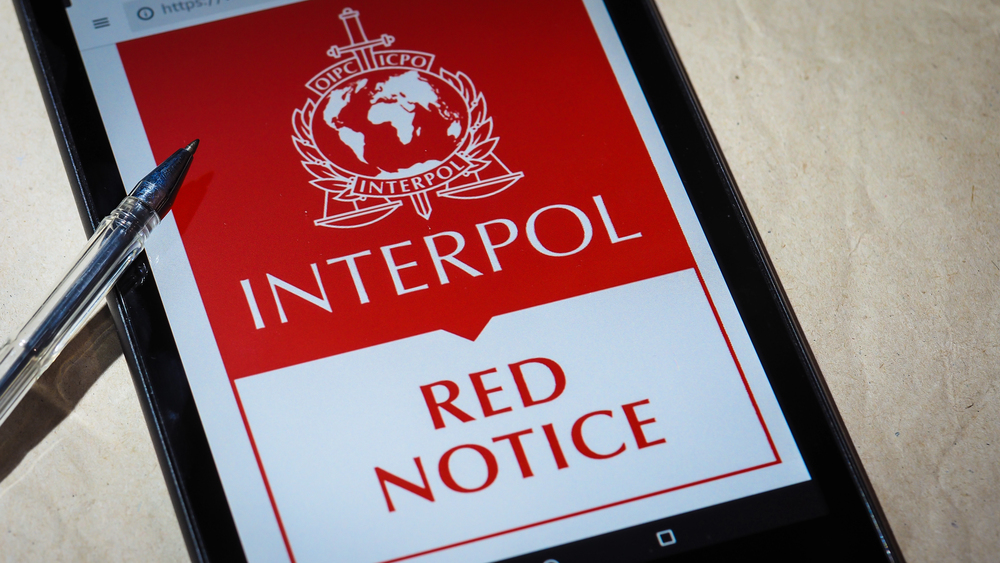
Primary Service — INTERPOL Status Check
Establish Your Status Before Taking Further Action
An INTERPOL status check is usually the most practical and proportionate starting point for anyone concerned about a possible international wanted alert.
It helps determine whether further legal action may be necessary and prevents clients from beginning a complex removal procedure before the actual situation has been clarified.
Depending on the circumstances, our assistance may include:
—Checking the public Red Notice database
—Preparing an official access request to the Commission for the Control of INTERPOL’s Files
—Submitting a request through a competent national authority where an appropriate procedure is available
—Analysing any restrictions placed on the disclosure of information
—Assessing whether additional checks in other relevant national or international systems should be considered
—Explaining the legal meaning and practical consequences of the response received
A status check does not automatically remove information, terminate criminal proceedings or cancel a national arrest warrant. Where information is identified, our lawyers assess whether there may be grounds for correction, deletion or another legal response.
No obligation to order further services.
Why Start With a Check
First Confirm the Problem. Then Choose the Remedy.
Clients sometimes approach us believing that a Red Notice definitely exists when there is no confirmed information. Others assume that they are safe because nothing appears on the public website, even though information may be available through non-public police channels.
A status check helps answer the central question:
Is INTERPOL currently processing information about me?
No information is identified
Further action may not be immediately necessary. Where a credible future risk remains, monitoring or a pre-emptive assessment may be considered.
Information is being processed
Our lawyers can assess whether there are grounds to request its correction or deletion.
A request is expected but not yet visible
A pre-emptive legal strategy may be appropriate.
A previous deletion request was refused
We can assess whether newly discovered facts may justify an application for revision.
How the Check Works
How We Check Your INTERPOL Status
01
Confidential Initial Enquiry
You provide a brief description of the situation, your current country of residence, the country connected with the criminal proceedings and any known information about a possible international alert. At this stage, you should not send complete criminal case files unless requested.
02
Selection of the Appropriate Procedure
We assess which official route is suitable in your circumstances. This may include:
— a public Red Notice search
— an access request to the Commission for the Control of INTERPOL’s Files
— a request through a competent national authority
— an assessment of whether another national or international database may be relevant
03
Preparation and Submission
Our lawyers prepare the request and the necessary supporting and authorisation documents. The procedure is conducted through official legal channels.
04
Review of the Response
Once a response is received, we explain:
— what information has been disclosed
— whether access to any information has been restricted
— what the response means in practice
— whether additional checks may be required
— whether correction, deletion or another legal measure should be considered
05
Recommendation on the Next Step
Where no further action is currently required, we say so. Where a legal risk is identified, we explain the available options, their limitations and the likely scope of further work.
Other INTERPOL Services
What Happens After the Check?
An INTERPOL status check is often the first stage of a wider international legal strategy. If information is identified, a future alert is anticipated or an earlier request has been refused, Legal Status can assess the appropriate next legal step.
Correction or Deletion of INTERPOL Data
Challenge a Red Notice, Diffusion or Other Personal Data
Where INTERPOL is processing information about a person, it may be possible to request its correction or deletion through the Commission for the Control of INTERPOL’s Files, known as the CCF.
The CCF does not conduct a new criminal trial and does not determine whether the applicant is guilty or innocent. A deletion request must explain why the processing of the data may conflict with the INTERPOL Constitution, the Rules on the Processing of Data or other applicable legal standards.
Every deletion request is handled by at least two lawyers. The final text also undergoes an additional review by a legal editor. We do not promise a predetermined result — before accepting a case, we assess its strengths, weaknesses and practical limitations.
Assess My Data Removal Options →Our assistance may include:
— analysis of the criminal proceedings and available documents
— assessment of the political, economic, religious or human rights context
— development of the legal position
— selection and preparation of supporting evidence
— preparation of the request to the CCF
— coordination of legal translations
— client review and approval of the final text
— submission through the appropriate official channel
— correspondence with the CCF
— analysis of additional questions and developments
— representation until a decision is received
Pre-emptive INTERPOL Legal Strategy
Act Before an Anticipated International Alert Creates a Crisis
A pre-emptive legal strategy may be relevant where there are credible indications that a country is preparing an arrest warrant, Red Notice, Diffusion or another international cooperation request.
Its purpose is to place legally relevant information before the appropriate INTERPOL bodies at an early stage and ensure that the wider legal and factual context can be considered if data are later submitted for processing.
A pre-emptive submission does not create an automatic or guaranteed block. Its effectiveness depends on the evidence, timing, allegations and decisions of the competent INTERPOL bodies.
Assess My Pre-emptive Options →Our assistance may include:
— assessment of the likelihood of an international request
— analysis of the client’s procedural status
— review of the available evidence
— assessment of the appropriate time for action
— preparation of an early legal submission
— communication with the relevant INTERPOL bodies
— supplementation of the legal position when new circumstances arise
Application for Revision
Reassessment After an Earlier CCF Refusal
An unfavourable CCF decision is not a finding of criminal guilt. However, an application for revision is not an ordinary appeal and cannot be based simply on repeating arguments that have already been considered.
Revision may be possible where significant new facts have emerged that were unavailable during the original procedure and could have affected the earlier decision.
Review My Previous CCF Decision →We assess:
— the original application
— the reasoning of the CCF decision
— weaknesses or inconsistencies in the earlier submission
— whether genuinely new facts have emerged
— whether those facts are legally significant
— whether the procedural requirements for revision can be satisfied
— whether another legal strategy may be more appropriate
Coordinated Extradition Assistance
INTERPOL Data May Be Only One Part of the Case
Removal of information from INTERPOL systems does not automatically terminate criminal proceedings or cancel an arrest warrant in the initiating country. At the same time, an INTERPOL alert may result in detention or extradition proceedings in a different jurisdiction.
Our role is to ensure that arguments submitted to INTERPOL do not conflict with the client’s broader international defence strategy.
Discuss My Cross-Border Case →Legal Status can help coordinate:
— the INTERPOL status check or data challenge
— communication with local extradition counsel
— analysis of the originating criminal case
— international protection and refugee-related arguments
— human rights evidence
— immigration and residence implications
— legal positions used across different proceedings

Global Reach — International Legal Assistance
One Cross-Border Strategy Across Multiple Jurisdictions
INTERPOL-related matters are rarely confined to one country. The criminal case may originate in one jurisdiction, the client may live in another, and the risk of detention or extradition may arise in a third.
Legal Status is structured to work internationally. Our head company is registered in Lithuania. Operational support is provided through Poland, while lawyers and experts working with the firm are located in several European countries. We also maintain a wider professional network of lawyers experienced in extradition, criminal defence, migration and international protection.
Our work involves clients and proceedings connected with:
Where representation before a national court or authority is required, we help coordinate the INTERPOL strategy with qualified local counsel. The client receives one coherent cross-border approach rather than several disconnected legal opinions.
Request International Legal AssistanceWhy Legal Status
Why Clients Worldwide Choose Legal Status
01
Specialist Focus
INTERPOL procedures, international wanted cases and extradition are central areas of our practice.
02
International by Structure
Legal Status is a European-based international legal company created to handle matters that cross national borders.
03
Expert Leadership
The practice is led by Alaksiej Michalevic, a specialist in INTERPOL-related matters, extradition and international human rights protection.
04
Team-Based Preparation
Every request for deletion is handled by at least two lawyers rather than being delegated to a single caseworker.
05
Independent Final Review
The final submission undergoes an additional legal and linguistic review before filing.
06
Cross-Disciplinary Analysis
An INTERPOL case may involve criminal law, extradition, refugee status, human rights, migration law and the rules of an international organisation at the same time. We examine these elements as part of one coordinated strategy.
07
International Human Rights Experience
Members of our team have experience with matters before the European Court of Human Rights and the UN Human Rights Committee.
08
Clients Worldwide
We assist clients regardless of their citizenship, country of residence or current location, subject to the legal and practical circumstances of the case.
09
Confidential Remote Work
Most INTERPOL procedures can be prepared and managed without the client travelling to our office.
10
Realistic Legal Advice
We do not promise guaranteed deletion, automatic blocking or a predetermined decision. We assess the evidence, explain the limitations and recommend only steps that have a clear legal purpose.

Lead Partner
Lead Expert
Alaksiej Michalevic
Lead Partner at Legal Status
Alaksiej Michalevic is a specialist in INTERPOL-related matters, extradition and international human rights protection.
He is a recipient of the Humphrey Award for outstanding achievements in the protection of human rights, holds a Master of Laws and a Doctorate in Social Sciences, and is a member of the European Criminal Bar Association and the Czech Bar Association.
He regularly acts as an expert witness in extradition proceedings, providing specialist analysis of international wanted mechanisms, politically influenced prosecutions and the human rights implications of extradition.
Alaksiej established the Legal Status practice in 2014 and continues to supervise the development of its legal strategies in complex INTERPOL and cross-border cases.
“The Commission for the Control of INTERPOL’s Files does not determine whether you are innocent. It assesses whether the processing of your data complies with INTERPOL’s rules. The strongest case is not the one that proclaims innocence most loudly, but the one whose legal position is more precise, better supported and more persuasive than the position presented by the National Central Bureau.
This is a specialist legal craft. We have mastered it.”
This approach defines the work of the entire Legal Status team. We do not submit emotional declarations or reproduce entire national criminal files. We identify the facts, rules and evidence that are relevant to the specific mandate of the CCF.
Check My INTERPOL Status
Lecturing on INTERPOL’s constitutional framework and data-processing rules.
About Legal Status
An International Legal Company Focused on Cross-Border Protection
Legal Status UAB specialises in complex and sensitive matters involving INTERPOL, international wanted alerts, extradition and international protection. The practice was established in 2014 at the initiative of Alaksiej Michalevic and brought together lawyers working across criminal law, international law, refugee protection, migration and human rights.
Our INTERPOL work is based on the INTERPOL Constitution, the Rules on the Processing of Data and the practice of the Commission for the Control of INTERPOL’s Files. Our international structure enables us to examine the originating criminal case, the INTERPOL procedure and the risks arising in the client’s country of residence as parts of one coordinated legal strategy.
Today, the team includes more than ten lawyers with experience in:
— criminal and criminal procedure law
— international public and private law
— the law of international organisations
— international refugee law
— international human rights law
— international humanitarian law
— migration and extradition law
Case Experience
Experience Beyond the Formal Criminal Allegation
An international wanted request may formally concern fraud, bribery, embezzlement or another ordinary criminal offence while the wider case contains political, commercial, religious or human rights elements.
Our lawyers have experience with matters involving:
— economic and financial allegations
— politically motivated or politically influenced prosecutions
— business disputes converted into criminal proceedings
— anti-war activists and political opponents
— individuals designated as “foreign agents”
— religious minorities, including Jehovah’s Witnesses facing persecution
— members of the LGBTQI+ community
— politicians and businesspeople
— ordinary citizens pressured to provide false testimony
We do not assume that every criminal case is politically motivated. We assess whether the wider context is legally relevant and whether it can be supported by reliable evidence.
Risks of Self-Submission
Your First Submission Should Not Become Your Weakest Evidence
Individuals are entitled to contact the CCF without a lawyer. The real question is not whether self-submission is possible, but what an incomplete or poorly structured request may do to the case.
A failed first attempt may close off arguments or procedural opportunities that would have been available if the case had been properly assessed from the beginning.
Have My Case Assessed Before FilingA premature submission may:
— reveal the defence position before it has been fully developed
— contain factual inconsistencies that later require explanation
— focus on arguments that fall outside the CCF’s mandate
— omit documents providing essential legal context
— overwhelm the decisive facts with irrelevant materials
— conflict with an extradition, asylum or national criminal defence strategy
— make a later revision considerably more difficult
Quality Control
An INTERPOL Request Is Never Treated as a Standard Form
The outcome of an INTERPOL procedure may depend on a relatively short written submission addressing a highly complex criminal and international background. For this reason, Legal Status does not rely on templates completed by a single case manager.
The request must be shorter than the underlying case — but legally stronger than the position supporting the international alert.
Every deletion request is:
— analysed by qualified lawyers
— handled by at least two members of the legal team
— checked against the INTERPOL Constitution and the Rules on the Processing of Data
— reviewed in light of the current practice of the CCF
— assessed for consistency with other legal proceedings
— approved by the client
— reviewed by a legal editor before submission
Where relevant, the team also draws on experience gained in matters involving the European Court of Human Rights and the UN Human Rights Committee.
Confidentiality
Confidentiality Starts With the First Enquiry
INTERPOL-related matters often involve information whose premature disclosure may create additional legal, personal or security risks. For this reason:
— we request only the information necessary for the current stage
— access is limited to team members involved in the matter
— documents are not disclosed without a legal purpose
— each submission is assessed in the context of the wider defence strategy
— successful cases are published only in anonymised form and, where appropriate, with the client’s consent
This principle applies from the first message, including before a formal engagement agreement is signed.
Send a Confidential RequestWarning Against Unofficial Services
No Back Doors. No Paid “Contacts”. No Secret Database Access.
Some intermediaries claim that they can secretly check or remove information from INTERPOL or police databases through personal contacts. Such offers should be treated as a serious warning sign. There is also a risk that passport details, criminal case documents and other sensitive information will be collected for fraudulent purposes.
The information provided may be:
— false
— outdated
— incomplete
— unlawfully obtained
— impossible to verify
— used to pressure the client into paying for further fictitious services
Legal Status uses only official legal mechanisms:
— requests to the CCF
— communication through authorised channels
— requests to competent national authorities
— cooperation with qualified local lawyers
A difficult legal problem requires a legal strategy — not a more expensive problem disguised as a shortcut.
Use an Official Legal RouteFrequently Asked Questions
{{ f.q }}
{{ f.sym }}{{ f.a }}
Expert-Led INTERPOL Assistance Worldwide
Not Knowing Is a Risk You Can Reduce
You do not need to begin with an expensive or complex data removal procedure. Start by establishing whether information concerning you is being processed through INTERPOL and what that information may mean. If further legal action is justified, our international team can assess the next step and coordinate it with related proceedings in other jurisdictions.
Worldwide assistance · Confidential remote preparation · Official legal channels only
Contact Form
Request an INTERPOL Status Check
Provide a brief description of the situation. We will review the information and explain which type of official check is appropriate.
Enquiry received
Thank you. Your request has been sent confidentially.
We will review the information and respond by email or your preferred messenger. Please do not send complete criminal case files unless requested.
Direct Contact
Contact Legal Status
Vilnius Office
A. Smetonos g. 5, Vilnius 01115, Lithuania
By prior appointment only.
Telephone: +370 521 41684
Office hours: Mon–Fri 09:00–19:00
International Secretariat
Mikolaja Kopernika 36B, 90-552 Lodz, Poland
By prior appointment only.
Telephone: +48 571 060 077
Messengers & Email
WhatsApp, Telegram, Signal and Viber are connected to the same number:
+48 571 060 077
Email: info@ls-rednotice.com
For in-person meetings in Vilnius or Lodz, please arrange an appointment in advance.
Request received
Thank you. We will contact you shortly.
Your request has been sent confidentially.
Quick contact
Leave your details and we will contact you
We use cookies to ensure the basic operation of this website and, with your consent, to analyse traffic anonymously. We do not use advertising cookies. You can accept or decline non-essential cookies; declining does not restrict access to the site. See our and .
Cookie Policy
How This Website Uses Cookies
This Cookie Policy explains how Legal Status UAB (“we”, “us”) uses cookies and similar technologies on this website. Cookies are small text files placed on your device when you visit a website. They help the site function correctly and, where permitted, help us understand how the site is used.
1. Strictly necessary cookies
These cookies are required for the basic operation of the website, including remembering your cookie consent choice. They do not collect personal data for marketing purposes and cannot be switched off. Legal basis: legitimate interest (Art. 6(1)(f) GDPR).
2. Analytics cookies (optional)
With your consent, we may use anonymised analytics cookies to understand which pages are visited and how visitors move around the site. The information collected is aggregated and does not directly identify you. These cookies are set only if you click “Accept All”. Legal basis: consent (Art. 6(1)(a) GDPR).
3. What we do not use
We do not use advertising cookies, cross-site tracking or social media pixels. We do not sell or share visitor data with advertisers.
4. Managing cookies
You can change or withdraw your consent at any time via “Cookie Settings” in the footer of this website. You can also delete or block cookies through your browser settings. Blocking strictly necessary cookies may affect the operation of the site. Your consent choice is stored for 12 months, after which you will be asked again.
5. Contact
Questions about this policy may be sent to info@ls-rednotice.com. Controller: Legal Status UAB, A. Smetonos g. 5, Vilnius 01115, Lithuania.
Privacy Policy — GDPR
How We Process Your Personal Data
Legal Status UAB, registered at A. Smetonos g. 5, Vilnius 01115, Lithuania, is the controller of personal data collected through this website within the meaning of Regulation (EU) 2016/679 (GDPR).
1. What we collect
We process only the data you voluntarily submit through the contact form or by direct communication: name, contact details, citizenship, country of residence, countries connected with proceedings, the description of your situation and any documents you choose to attach.
2. Purpose and legal basis
Data are processed solely to review and respond to your enquiry, assess whether we can assist, and, where an engagement follows, to provide legal services. Legal bases: consent (Art. 6(1)(a) GDPR), steps prior to entering into a contract (Art. 6(1)(b) GDPR) and, for sensitive case-related information, establishment, exercise or defence of legal claims (Art. 9(2)(f) GDPR).
3. Confidentiality and disclosure
Access to your data is limited to team members involved in your matter. Data are not disclosed to third parties without a legal purpose, are never sold, and are shared with cooperating local counsel only as required for your case and with appropriate safeguards.
4. Retention
Enquiry data are retained only as long as necessary to handle your enquiry or as required by professional and statutory obligations, after which they are deleted or anonymised.
5. Your rights
You have the right to access, rectify or erase your data, to restrict or object to processing, to data portability and to withdraw consent at any time. You may lodge a complaint with the Lithuanian State Data Protection Inspectorate (VDAI) or your local supervisory authority.
6. Contact
Requests concerning personal data may be sent to info@ls-rednotice.com or by post to Legal Status UAB, A. Smetonos g. 5, Vilnius 01115, Lithuania.